PRISM was started in the Fall of 2024. It was conceived from the notion that teachers create a lot of our own tools to make what works for us and what we need possible. Edtech is in a strange spot because it's out of the grasp of many teachers including myself! With the rise of AI, I quickly realized that dreams can quickly be formed into reality. I immediately started out on creating a priority standards management system.
I had worked on Google Spreadsheets in the past, but the nuance and story of growth could never be shared adequately. Plus working with PLC teams, the way data was handled was drastically different from team to team. Everyone was just storing everything in Google Drive and hoping they could find it one day!
From November 2024 to March 2025, those were some of the hardest, most challenging times in the creation of this site. Figuring out what the end goal looked like, what is usable, how do we achieve my dream, and most of all how can I create something with zero programming experience. The site went through 3 complete recreations, each time starting from ground zero. Each time the hurdle was the same: how do I manage standards beyond math?
As a math teacher, I liked things black and white. Working with Common Core Math standards, those were very black and white they built upon each other. So I would always get math standards to work, but I always knew I wanted this site to support every educator across every subject. AI helped a huge amount in reigning in subject nuance, but the problem of high school where subjects aren't bound by grade level escaped me. Hence the reason why PRISM currently is only a K-8 system.
Project L: The Beginning
PRISM in its development was code named “Project L”, short for Project Learning. It had a huge goal: not only track priority standards, but support self-paced students toward mastery of those priority standards.
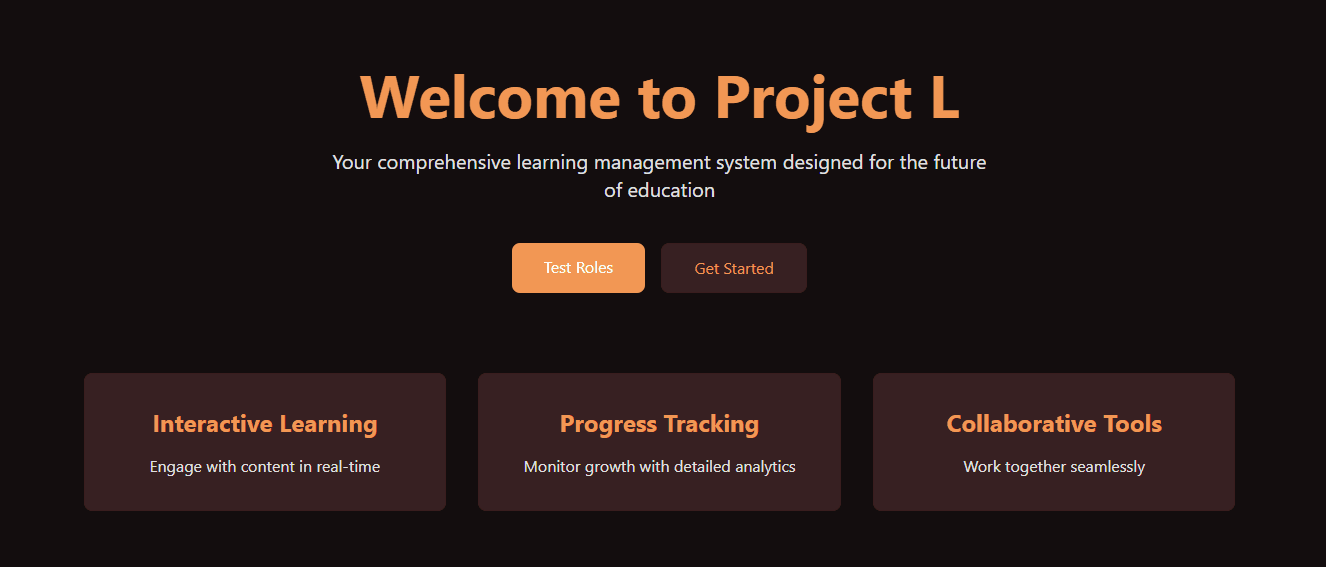
The above was the first thing that was built, the landing page. Just being able to log into the site was huge for me! As the site began to take shape, I realized learning could be thought of as a galaxy. And with my curiosity of self-paced learning, the learners would be the space explorers!
A Galaxy of Learning
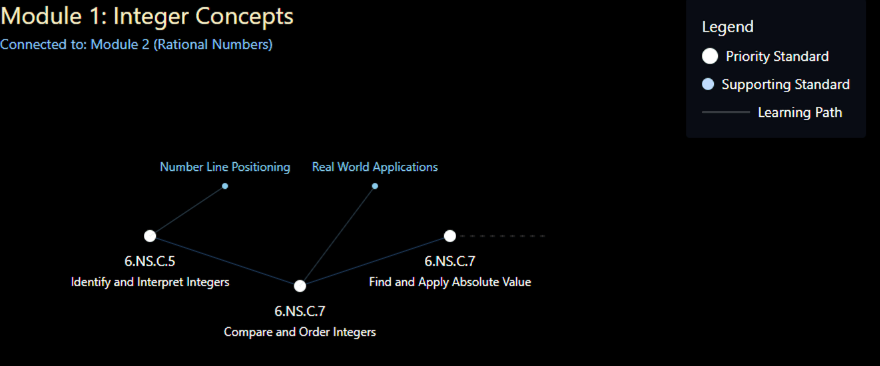
I actually had a whole vocabulary set up that would replace all education jargon with celestial vocab! It started with a galaxy (subject). From the galaxy you'd have a sector (grade level). Within a sector you'd have star clusters (standards), and from those you'd have stars (priority/supporting standards). The size and brightness of a star would determine its importance in mastery of a galaxy!
Learners would move across a sector mastering each star, gaining an overall mastery score. Along the way they'd be given teacher-created lessons and videos, take mastery checks, and if they failed, they'd be put on an intervention pathway that gave them videos or practice based on what questions they missed. I even started thinking about star connections within the star sector!
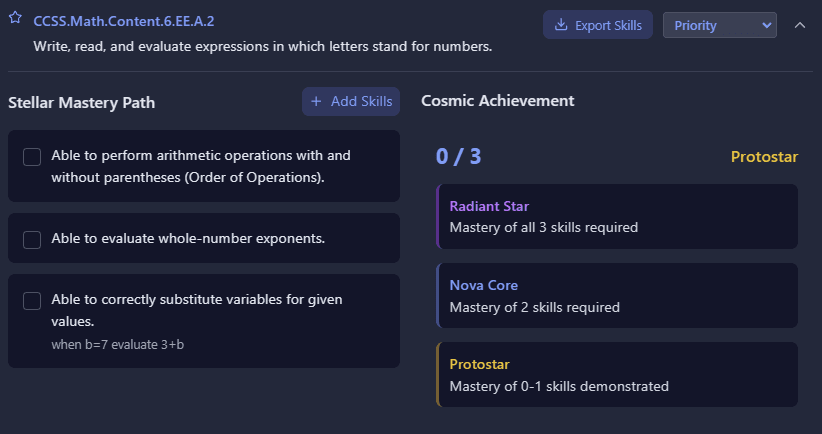
From each star, students would have a skills checklist to master:
The Pathway System
The galaxy then turned into a pathway system, a freeform idea of connecting learning standards with a pathway of learning:
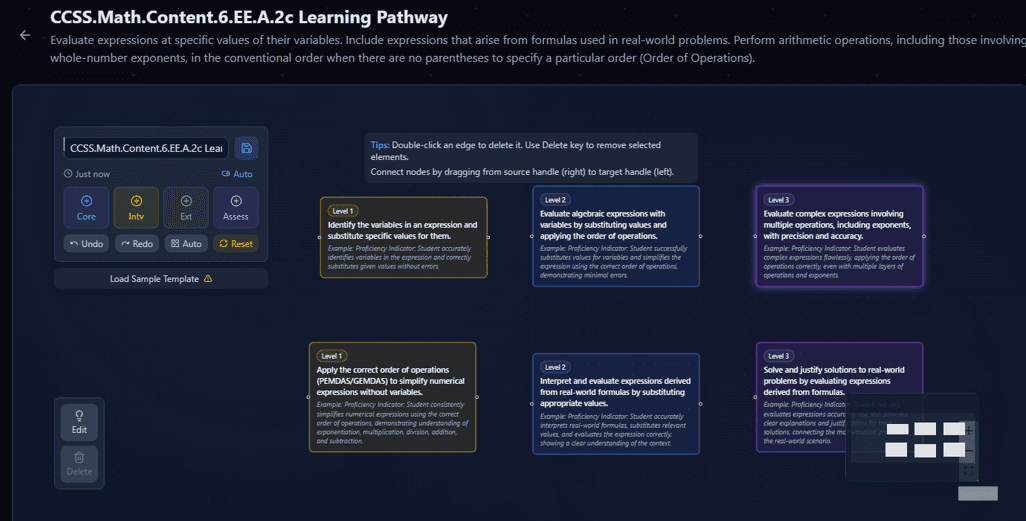
Along the way, teachers could create “core” lessons, intervention, and extension activities. The idea was to have students work along these teacher-created pathways, opening up the idea that teachers could reach any student, whether they be at home sick, homeschooling, or in the classroom. The pathway system sought to use teacher videos and teacher expertise to make learning personable. Rather than just watching a Khan Academy video, students in a district would know that their teacher or their school made this for them.
It All Fell Apart
But… it all fell apart. March 2025, I realized creating something like this was way over my head. My head had a galaxy of possibilities, but every iteration, I didn't see things working. Teachers teach in so many different ways. It was a constant battle of top-down teaching or bottom-up teaching. Do I build a system that builds from level 1 and 2 skills into level 3 and 4? Or do we start at level 3 and 4, then fill in the level 1 and 2 skills as needed?
Some subjects worked better for each approach, and every teacher had a different mindset. It was all too much for the learning pathway to handle, and it was abandoned. I took 2 months off, exhausted, thinking about what the new identity of this site was to be.
I had been doing work on vertical alignment and investigating student achievement scores from K-12 for math and reading. I realized there was a huge gap in how educators see learning. Learning isn't contained by one grade level. It's a story and journey across multiple grade levels. As a middle school educator, when I get my students, all I get is a standardized test score from last winter or spring. That's about it for story.
Enter PRISM
So what if the system pivoted away from self-paced learning, toward defining the story of learning for each student? Not only that, but what if this whole site was powered by PLCs? That became the new goal: data tracking tools to report the story of students in a district.
With this new end goal, the celestial vocabulary, which was up to 2 pages by now, was left in the space dust. Enter, PRISM.
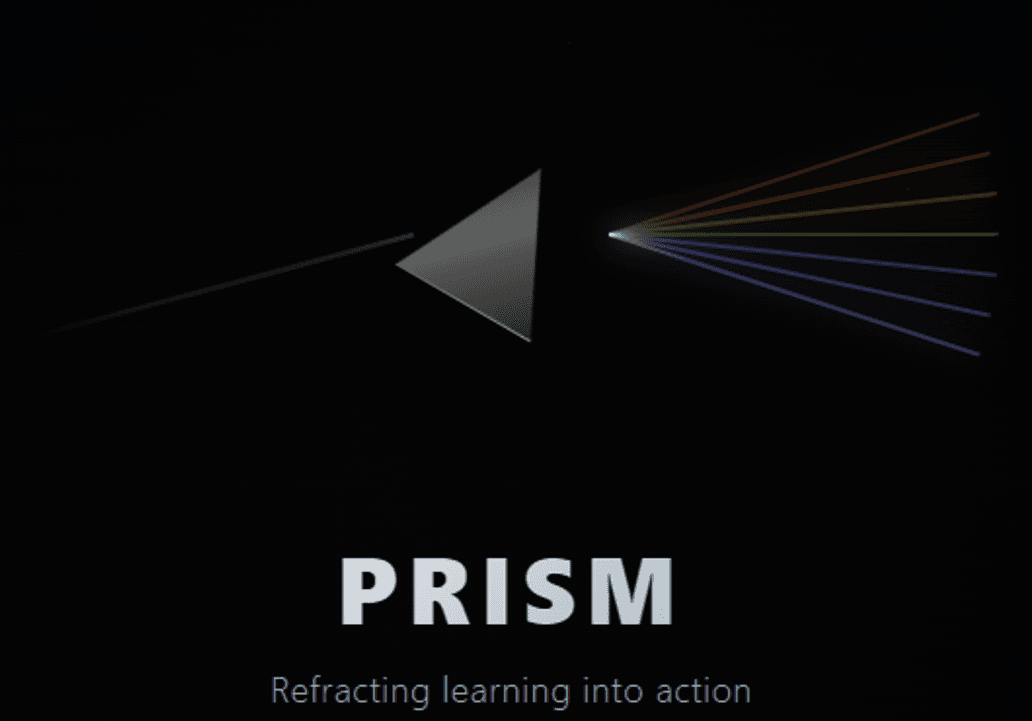
Truly inspiring graphics! The first iteration of the logo.
From June 2025 to now, I have had one mission: how do we uncover the story of learning across a student's K-8 journey?After that's done how can we then use this story to help high school students derive a plan to make themselves the best college graduates possible?
About the Founder

Founder & Developer
Ethan Unland
6th grade math teacher and EdTech developer. Ethan Unland has built PRISM from the ground up. Leaning on his 12 years of teaching experience along with the feedback of other teachers and administrators PRISM was built with the belief that teachers deserve tools built for them. But even more so, that students deserve to have their educational journey told, and teachers deserve to see their impact on that journey.